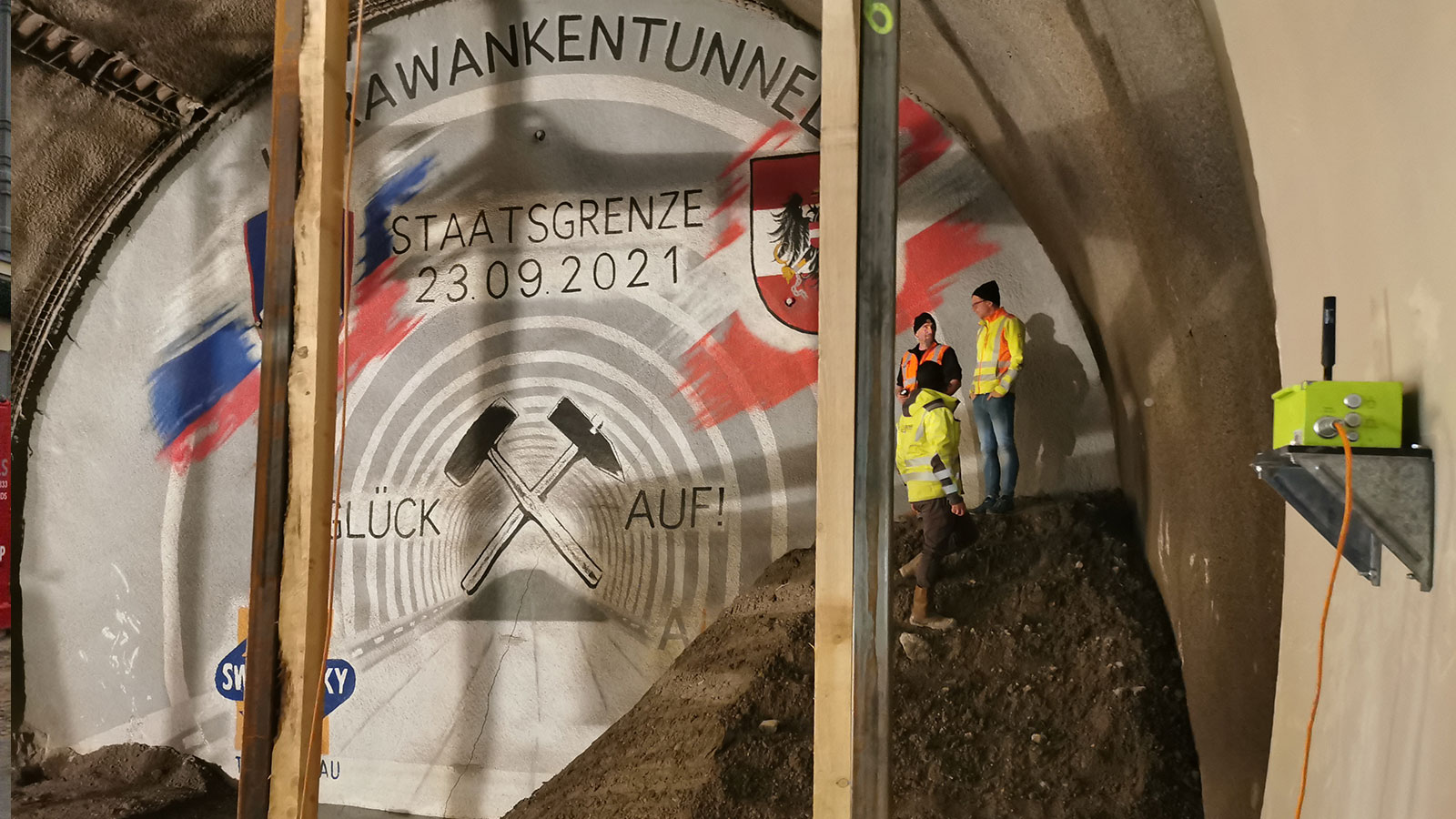
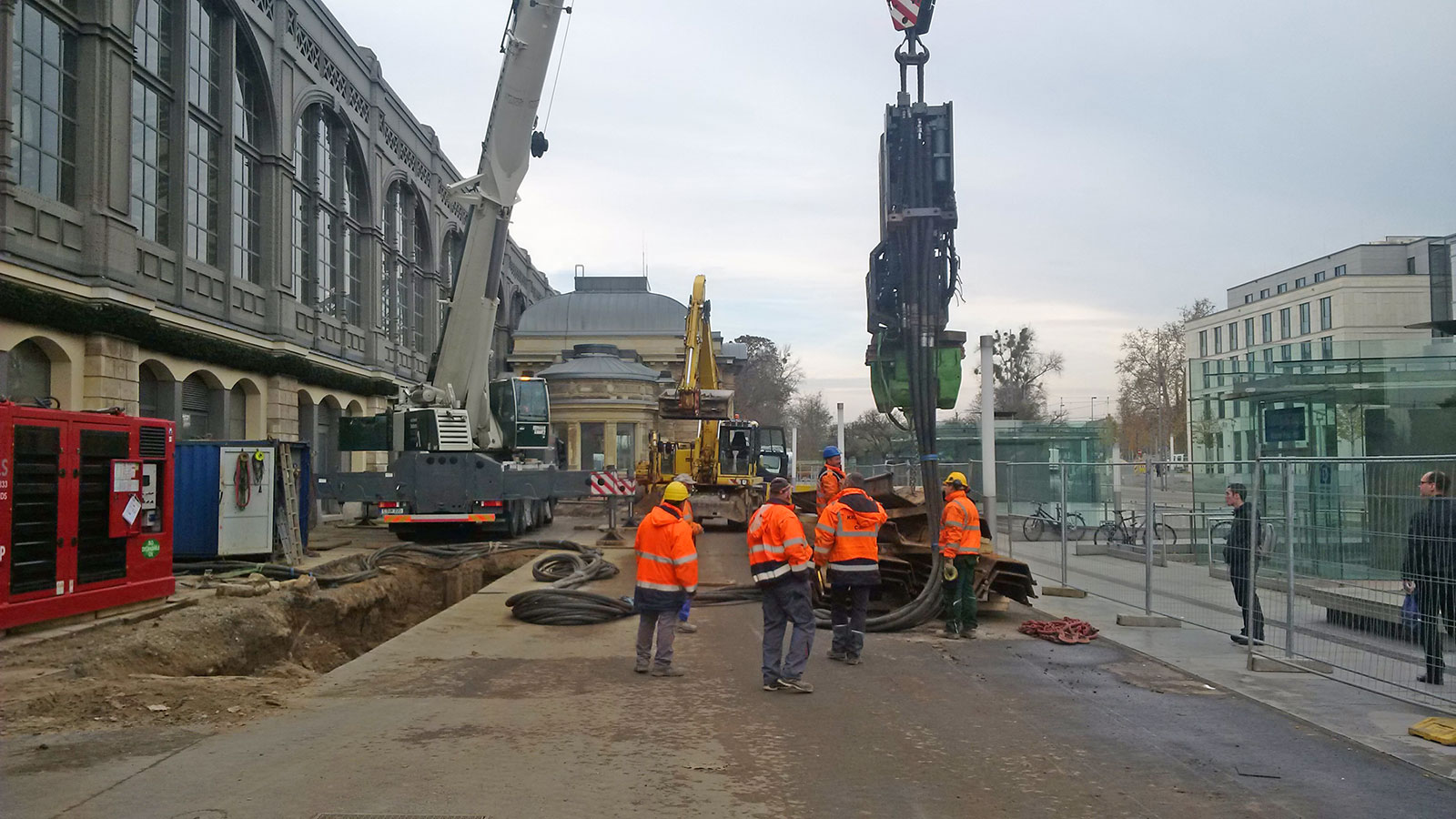
Many construction activities, especially blasting, pile driving, soil compaction, track laying, demolition, or dismantling, are sources of vibrations (vibration emission) and usually affect neighboring buildings and structures via the ground (vibration transmission) (vibration immission). There, these immissions can cause discomfort or insecurity among residents, and stronger vibrations can even damage the buildings themselves.
DIN 4150 "Vibration in building construction"
Part 3 of the DIN 4150 standard, "Vibrations in Building Construction – Effects on Structures," specifies which vibration levels are acceptable for structures. These levels can occur during compaction work with vibrating compaction rollers or vibratory plates in road construction, during sheet pile wall installation by driving or vibrating sheet piles, or during demolition work with hydraulic hammers or other demolition equipment.
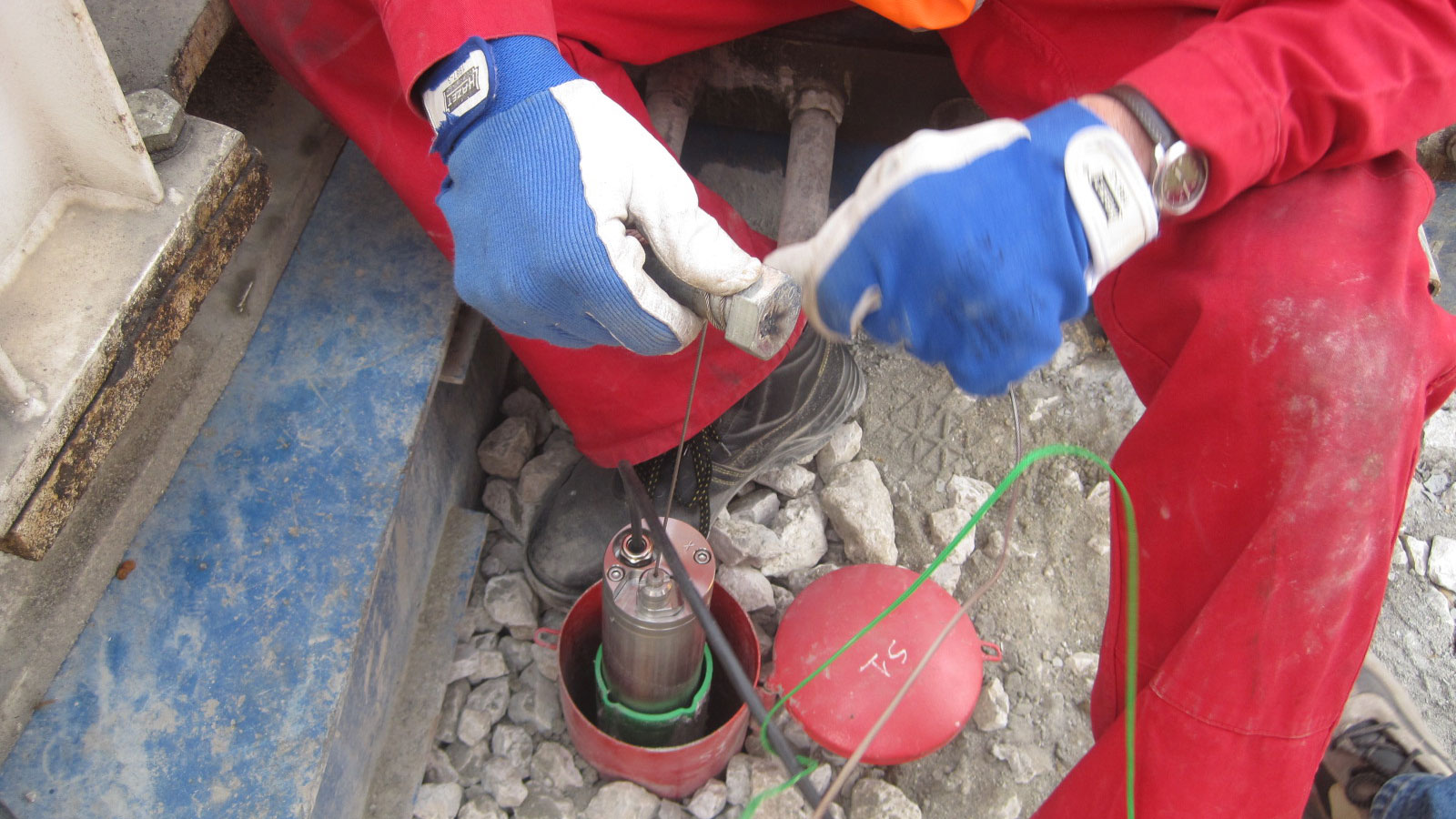
Vibration monitoring at suitable measuring points allows for verification against predefined guideline values to prevent nuisance and damage, or serves as evidence.
Vibration measurements according to Part 2 of the DIN 4150 standard, "Vibrations in Building Construction – Effects on People in Buildings," enable a quick and straightforward determination of the degree of nuisance when vibrations, caused, for example, by traffic or industrial machinery, lead to complaints from residents.
Creating vibration forecasts
In many cases, vibration forecasts are essential to determine the potential impact of construction activities on existing structures and/or residents. This is especially true when direct access to the vibration locations is either impossible or economically impractical. A detailed analysis of vibration propagation allows for measures to be taken to minimize negative impacts even before construction begins. This is particularly important during the planning phase of construction projects to prevent damage to surrounding buildings or infrastructure. Appropriate precautions during construction projects enable the early detection of potential vibration impacts and the implementation of corresponding protective measures.
Vibrations can not only be perceived directly but can also generate secondary airborne sound via elastic structures (e.g., floors, walls), which is often perceived as disruptive. Regional and application-specific standards and guidelines define benchmark values and criteria designed to ensure construction activities that are free from complaints and damage.
SEMEX-EngCon's established and proven measurement technology enables precise measurement in all applications, even remotely, intuitive operation and highly automated evaluation in accordance with applicable standards.