MENHIR measuring system – Real-time recording of vibrations for construction and environmental monitoring

Vibration measurement for monitoring structural dynamics

Structural monitoring for the early detection of damage

The dynamic conditions to which a structure is exposed must be monitored to detect and assess its integrity, fatigue, or damage at an early stage, which impacts the structure's vulnerability, safety, and predicted service life. Measuring structural dynamic parameters enables reliable risk assessment and forecasting.

Bridge monitoring

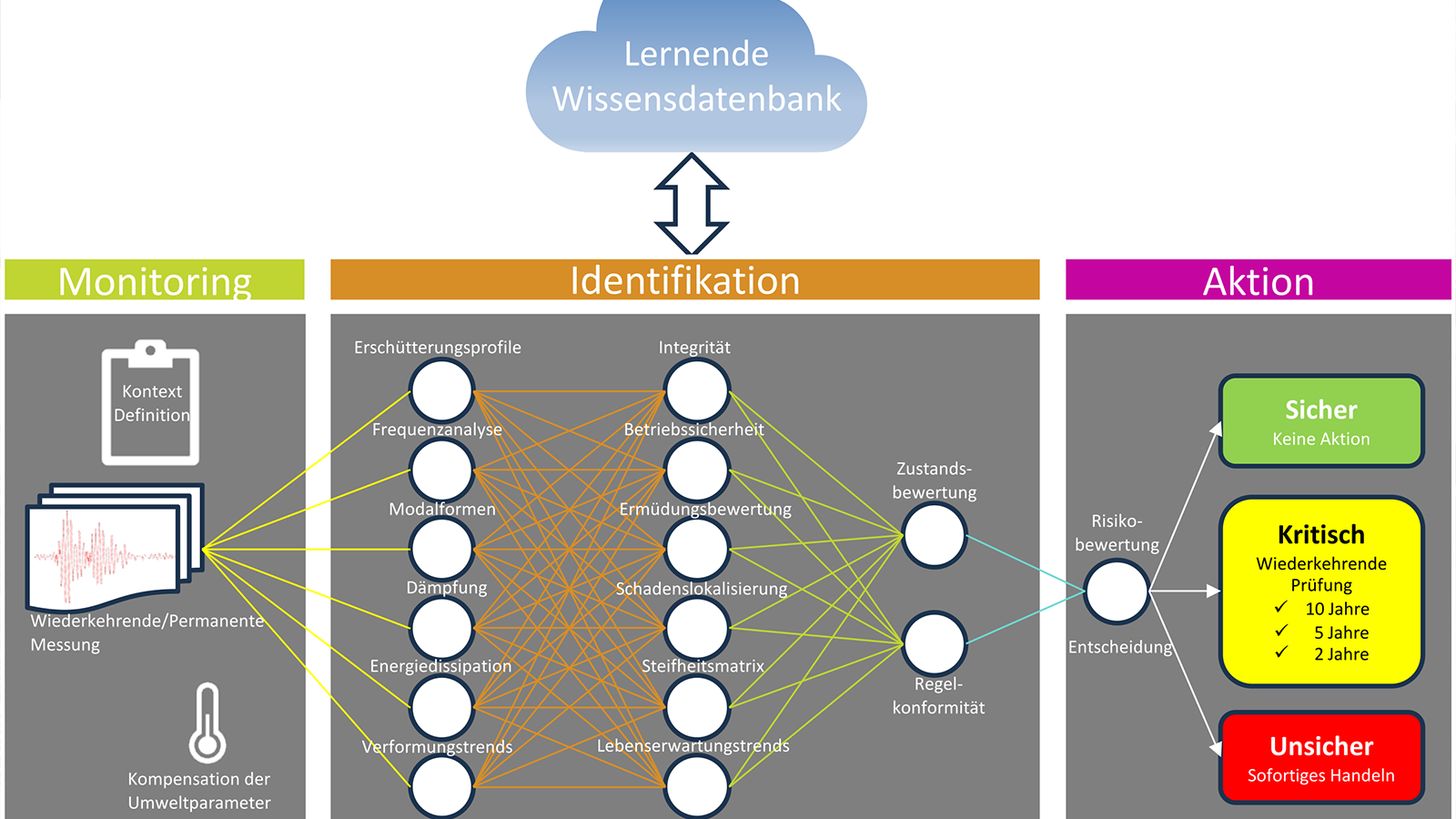
Bridges (road, rail, and pedestrian bridges) are considered critical infrastructure and require recurring or even permanent inspections, as their traffic load has typically increased dramatically since their initial planning. Therefore, a thorough understanding of the actual condition of bridges is of paramount importance. The recording and evaluation of dynamic properties has gained significant traction in recent years, as it appears to enable a largely objective risk assessment. Furthermore, this allows for the creation of a learning knowledge database, enabling future AI-based forecasts to be generated from the measurement data.

SEMEX-EngCon, in collaboration with the Karlsruhe Institute of Technology (KIT), has successfully further developed its MENHIR vibration measurement system within the framework of a funded project to meet precisely these specific measurement requirements.

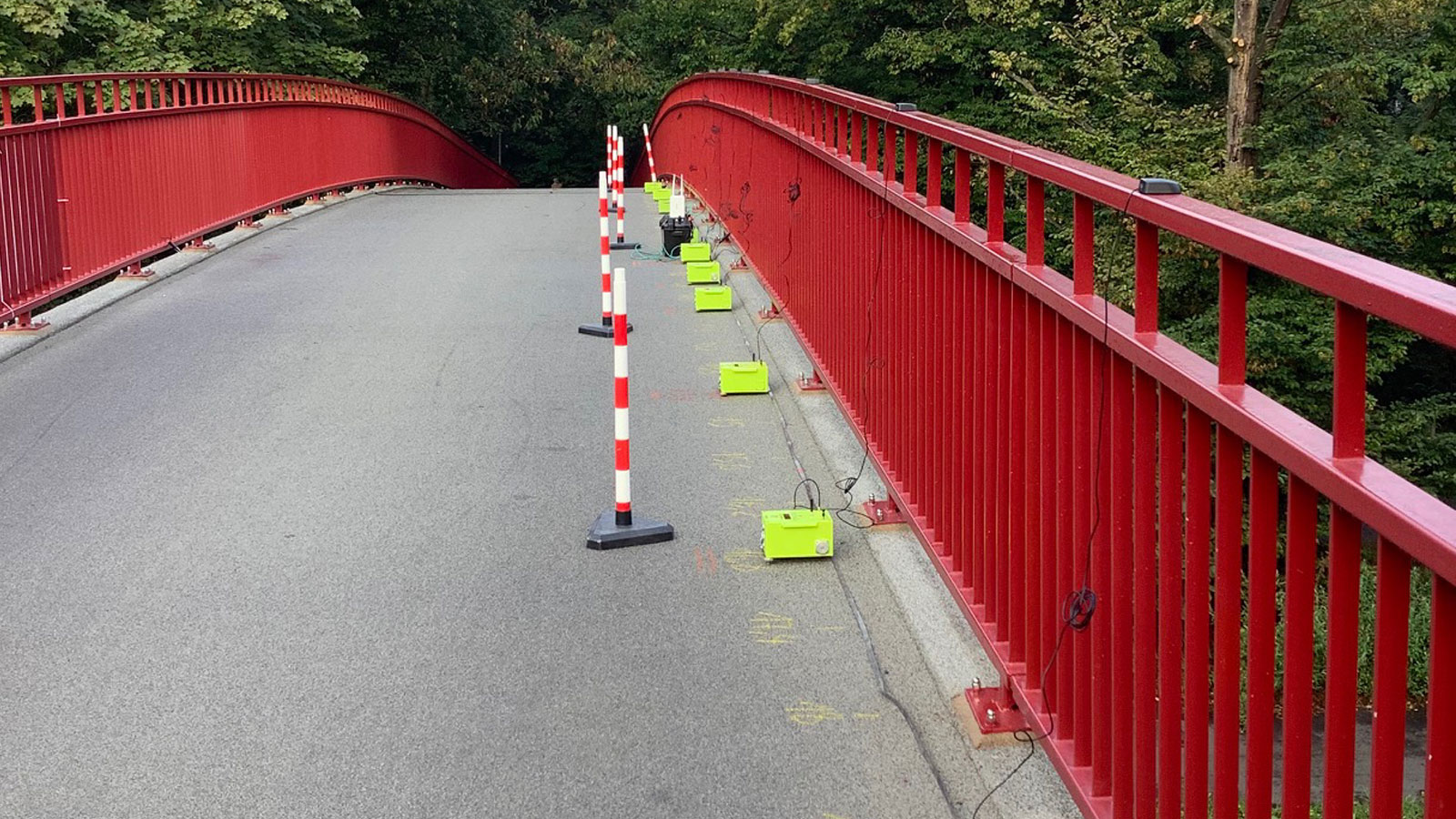
Wirelessly networked, time-synchronized MENHIR vibration measuring devices collect measurement data to identify and locate damage using Operational Modal Analysis (OMA).

Good to know

Karlsruhe Institute of Technology
The Karlsruhe Institute of Technology (KIT) is "The Research University in the Helmholtz Association". As the only German University of Excellence with nationally significant research activities, it offers students, researchers and staff unique learning, teaching and working conditions.
Operative Modal Analysis (OMA)
Operative Modal Analysis (OMA) enables the determination of a structure's modal parameters without specific excitation. The previously common, subjectively influenced visual inspection can thus be supplemented by objective, sensor-based monitoring. Based on the modal parameters of natural frequencies and mode shapes, damage associated with changes in stiffness can be detected. This allows for the early localization of non-visible bridge damage.